Celebrities with British Roots
 Cole PalmerMother’s side is British
 Keanu ReevesMother born in Essex, England
 Lewis HamiltonMother born in Birmingham, England
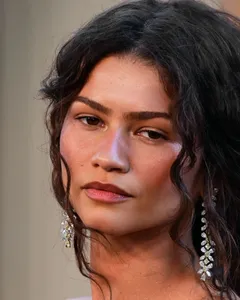 ZendayaGreat-grandfather from Dundee, Scotland
No celebrity matches your search.
What British means
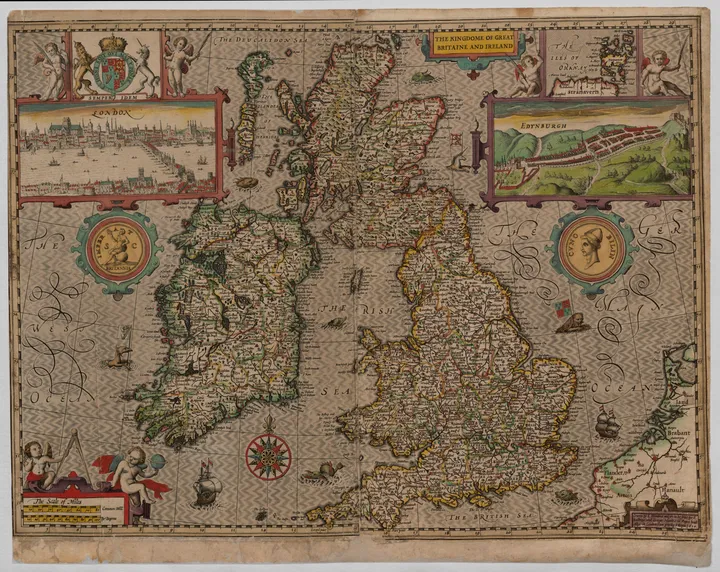
The United Kingdom of Great Britain and Northern Ireland is a political union of four countries: England, Wales, Scotland and Northern Ireland. It is a sovereign state, and each of its four nations is a country in its own right. Great Britain is the name for England, Scotland and Wales together with their islands. The British Isles is a purely geographic term for Great Britain, Ireland and some 5,000 smaller islands, the Republic of Ireland included.[4]
Since 2011 the census of England and Wales has asked people to tick every national identity that applies. The Office for National Statistics (ONS) describes national identity as the country or countries where a person feels they belong, and adds that it “is not dependent on ethnic group or citizenship”. In England the share choosing British as their only identity rose from 19.2% in 2011 to 56.8% in 2021, and the share choosing English alone fell from 60.4% to 15.3%. The 2021 form in England listed British first, ahead of English, and the ONS sees this change as the most likely cause of the swing. Welsh was the only identity of 55.2% of people in Wales.[5] Scotland’s census of 2022 found that 65.5% of people said their only national identity was Scottish, and 13.9% said it was British.[6]
Ethnic group is a separate question. In 2021, 74.4% of the population of England and Wales chose “English, Welsh, Scottish, Northern Irish or British” within the White group, down from 80.5% in 2011. The word British also appears in other categories, such as “Asian, Asian British or Asian Welsh” and “Black, Black British, Black Welsh, Caribbean or African”.[7] The Scottish census recorded 77.7% White Scottish and 9.4% Other British.[6]
How the United Kingdom was formed
An act of 1535 incorporated Wales into the realm of England and extended English law to it.[8] In 1603 King James VI of Scotland also inherited the English crown. England and Scotland remained separate countries under one king.[9] Under the Treaty of Union, the two kingdoms merged on May 1, 1707. Its first article reads that they shall “for ever after be united into one Kingdom by the name of Great Britain”.[10]
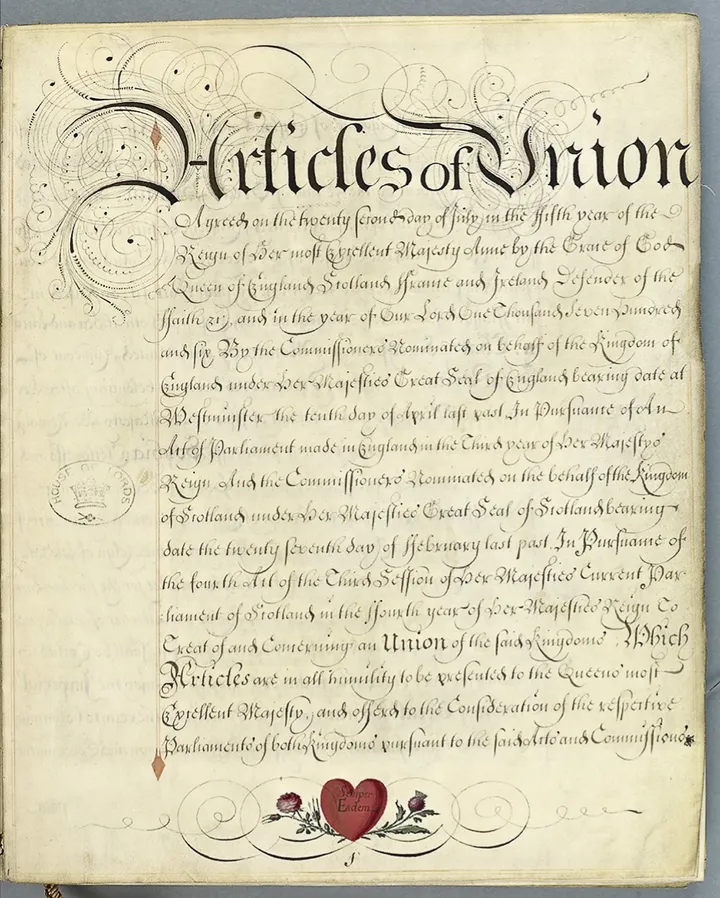
A second union followed on January 1, 1801, when Great Britain and Ireland became the United Kingdom of Great Britain and Ireland.[11] All of Ireland belonged to the kingdom until 1922.[4] An act of 1927 laid down that the name United Kingdom means Great Britain and Northern Ireland.[12]
The Union Flag and why Wales is missing
The Union Flag dates from 1606. A royal proclamation ordered ships from both of King James’s kingdoms to fly the red cross of St George and the white cross of St Andrew at the main top, “joined together, according to a form made by our Heralds”.[9] The Treaty of Union kept the two crosses for the flag of Great Britain, and Queen Anne retained the existing design.[10][9]
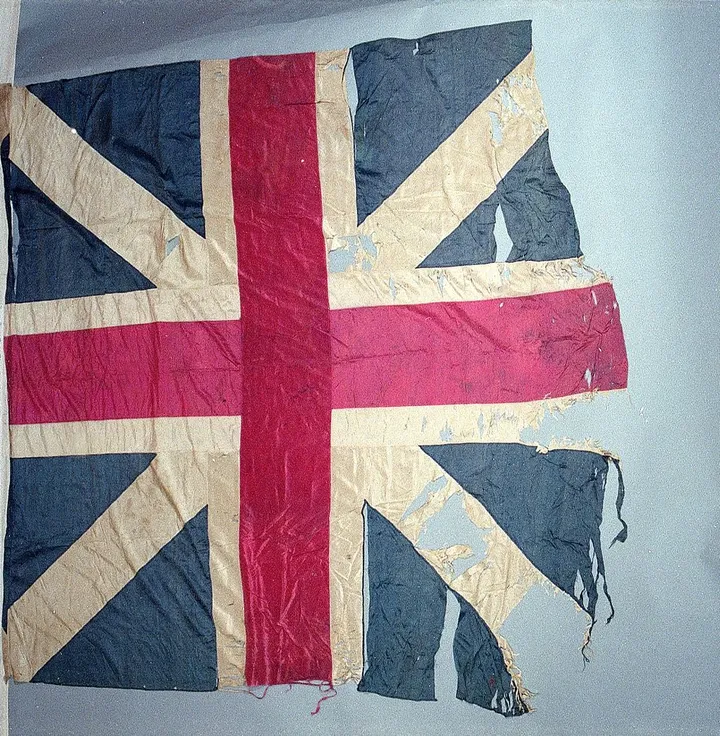
For the union with Ireland in 1801, the College of Arms added a red diagonal cross on white, which later became known as the cross of St Patrick.[9] Wales has no symbol of its own in the flag, because it had already been united with England when the first version was created in 1606.[13]
What DNA reveals about the people of Britain
Farming reached Britain around 4000 BC, a thousand years after it had appeared in neighboring parts of the continent. A 2019 study of DNA from 6 hunter-gatherers and 67 early farmers concluded that newcomers from the continent brought agriculture with them. Most of their ancestry went back to farmers from the Aegean who had spread west along the Mediterranean.[14]
From about 2450 BC, people associated with Beaker pottery arrived from the continent. Most of those buried in southern Britain were closely related to Beaker people from Oostwoud in the Netherlands. Within a few hundred years, about 90% of Britain’s gene pool had been replaced, according to a study published in 2018.[15] Another study traced a further migration in the Middle and Late Bronze Age. The newcomers were genetically most similar to ancient people from France, arrived over several centuries up to about 875 BC and contributed about half the ancestry of the Iron Age population of England and Wales. In Scotland the study found no such shift. The authors suggest that the migrants may have brought early Celtic languages to Britain.[16]
The People of the British Isles project looked at the population before the migrations of the 20th century. Its researchers analyzed the DNA of 2,039 people from rural areas whose four grandparents had all been born less than 80 km apart, on average in 1885. The genetic groups they described in 2015 lined up closely with geography. Orkney stood out most clearly, and about 25% of the islanders’ DNA came from Norwegian ancestors.[17][18] The islands were part of Norway from 875 to 1472.[17]
Wales formed the next distinct group, and the Welsh appeared closer to the first settlers after the last ice age than other people in the UK. Cornwall and Devon separated almost exactly along the county boundary. One large and fairly uniform group covered most of eastern, central and southern England.[18] “We saw no evidence of a general ‘Celtic’ population in non-Saxon parts of the UK,” the authors write. Scotland, Northern Ireland, Wales and Cornwall turned out to be among the most different from one another.[17][18]
British ancestry in American statistics
Most of the millions of people who emigrated from Britain over the past four centuries went to the United States, Canada, Australia, New Zealand and South Africa.[19] The American Community Survey asks people about their ancestry and counts no more than two answers for each person.[20] English, Scottish, Welsh and British each have a line of their own in the results. Scotch-Irish is counted separately from both Scottish and Irish.[21]
Source: U.S. Census Bureau, American Community Survey[21]
The Census Bureau points out that ancestry and birthplace are different things. An answer may reflect close ties to a community or only the memory of ancestors several generations back.[20]
Finding British ancestors in the records
Each part of the kingdom keeps its own registers of births, marriages and deaths. Civil registration began in England and Wales in 1837, in Scotland in 1855 and in Northern Ireland in 1864, where non-Catholic marriages are recorded from 1845. Before that, families appear in parish registers.[22]
Scotland takes its census separately from England and Wales. For both, the returns from 1841 to 1921 can be searched by name. For Northern Ireland, as for the rest of Ireland, most 19th-century returns were lost in the fire at the Four Courts in Dublin in 1922. Apart from a few fragments, only the censuses of 1901 and 1911 survive.[23]
Emigrants who sailed from British and Irish ports to destinations outside Europe between 1890 and 1960 appear in the outward passenger lists of the Board of Trade, often with their age, occupation and last address in the UK. For most emigrants, the fuller records are found in the country where they settled.[19]
From Great Britain to the United States
The 1880s brought 810,900 immigrants from the United Kingdom, more than any other decade since US records began in 1820. Until 1925 the statistics count Northern Ireland with Ireland.[3]
- 1707
England and Scotland become the Kingdom of Great Britain on May 1. Under the Treaty of Union, the subjects of both countries may trade freely with the new kingdom’s colonies.[10]
- 1773–1775
Customs officers in British ports register emigrants leaving for America, with their age, occupation, last place of residence and reason for leaving. The registers survive at The National Archives in Kew.[19]
- 1776
The Declaration of Independence recalls that the colonists had appealed to the British people “by the ties of our common kindred”. It declares the colonies free of all allegiance to the British Crown.[24]
- 1783
The Treaty of Paris is signed on September 3. In the negotiations Britain had accepted American independence and the boundaries of the new country.[25]
- 1890
Residents born in Great Britain reach 1,251,402, the highest number in the censuses from 1850 to 1930. More than a quarter of them come from Scotland or Wales.[26]
- 1929
Quotas based on national origin take effect on July 1. They follow the estimated origins of the US population of 1920. Great Britain and Northern Ireland receive the largest annual quota, 65,721, and Germany the second largest, 25,957.[27]
- 1946
On February 4 the SS Argentina reaches the United States with 452 British women, 173 children and one bridegroom, the first group of war brides. A law of December 1945 had exempted the spouses of American servicemen from the immigration quotas.[28]
- 2022
10,331 people whose last residence was the United Kingdom become permanent residents of the United States.[3]
Sources
- Office for National Statistics: Population estimates for the UK, England, Wales, Scotland and Northern Ireland, mid-2025 (October 1, 2026)
- U.S. Census Bureau: American Community Survey 2024, 1-year estimates, table B05006, Place of Birth for the Foreign-Born Population in the United States
- Office of Homeland Security Statistics: Yearbook 2022, Table 2, Persons Obtaining Lawful Permanent Resident Status by Region and Selected Country of Last Residence, Fiscal Years 1820 to 2022
- Ordnance Survey: The difference between UK, Great Britain and the British Isles (August 3, 2011, updated March 2020)
- Office for National Statistics: National identity, England and Wales, Census 2021 (November 29, 2022)
- National Records of Scotland: Scotland’s Census 2022, Ethnic group, national identity, language and religion (May 21, 2024)
- Office for National Statistics: Ethnic group, England and Wales, Census 2021 (November 29, 2022)
- legislation.gov.uk: Laws in Wales Act 1535 (27 Hen. 8 c. 26)
- The Flag Institute: Graham Bartram, History of the Union Flag
- legislation.gov.uk: Union with Scotland Act 1706, Articles I and IIII
- legislation.gov.uk: Union with Ireland Act 1800, Article First
- legislation.gov.uk: Royal and Parliamentary Titles Act 1927 (April 12, 1927)
- Library of Congress, In Custodia Legis: Clare Feikert-Ahalt, Union Jack? Union Flag? (September 30, 2010)
- Selina Brace et al.: Ancient genomes indicate population replacement in Early Neolithic Britain, Nature Ecology & Evolution 3 (April 2019)
- Iñigo Olalde et al.: The Beaker phenomenon and the genomic transformation of northwest Europe, Nature 555 (February 2018)
- Nick Patterson et al.: Large-scale migration into Britain during the Middle to Late Bronze Age, Nature 601 (published online December 22, 2021)
- Stephen Leslie et al.: The fine-scale genetic structure of the British population, Nature 519 (March 19, 2015)
- Wellcome Trust: Who do you think you really are? The first fine-scale genetic map of the British Isles (March 19, 2015)
- The National Archives (UK): Emigration, research guide
- U.S. Census Bureau: About Ancestry (revised April 2, 2026)
- U.S. Census Bureau: American Community Survey 2024, 1-year estimates, table B04006, People Reporting Ancestry
- The National Archives (UK): Where to go for birth, marriage and death certificates, research guide
- The National Archives (UK): Census records, research guide
- National Archives (US): Declaration of Independence, a transcription
- Office of the Historian, U.S. Department of State: Treaty of Paris, 1783
- U.S. Census Bureau: Campbell J. Gibson and Emily Lennon, Historical Census Statistics on the Foreign-born Population of the United States, 1850–1990, Working Paper No. 29, Table 4 (February 1999)
- Herbert Hoover: Proclamation 1872, Limiting the Immigration of Aliens Into the United States on the Basis of National Origin (March 22, 1929), via The American Presidency Project
- The National WWII Museum: Coming to America, The War Brides Act of 1945 (December 28, 2020)
More from Europe
Italian 4German 3Irish 2Spanish 2Albanian 1Basque 1Bosnian 1French 1Hungarian 1Kosovo Albanian 1Portuguese 1