Celebrities with Scottish Roots
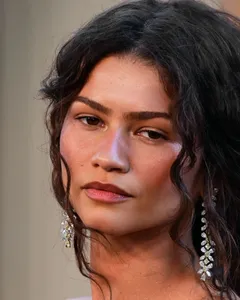 ZendayaGreat-grandfather born in Dundee
Picts, Gaels, Britons, Angles and Norse
The Picts first appear in written sources in the late 3rd century AD, resisting the Romans. They went on to rule a powerful kingdom in what is now northeast Scotland.[5] In 2023 researchers published the genomes of two Picts buried at Lundin Links in Fife and at Balintore in Easter Ross. Their gene pool goes back to the older Iron Age, which points to an origin in the British Isles. Among people living today, those from western Scotland, Wales, Northern Ireland and Northumbria are genetically closest to them.[5]
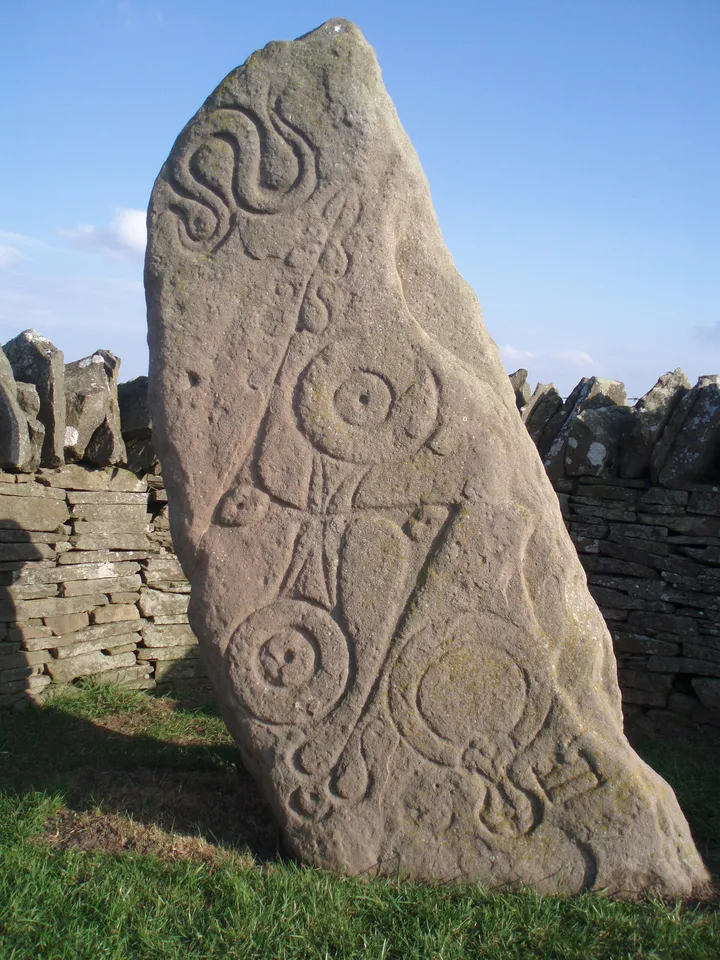
In the 5th century, Gaelic speakers from Ireland settled in the southwest of Scotland.[6] The historian Bede, who died in 735, counts the Scots as a third nation in Britain besides the Britons and the Picts. In his account they came from Ireland under a leader named Reuda and took land among the Picts.[7] The Britons held the kingdom of Strathclyde in the southwest.[8][9] The Angles of Northumbria may have taken Edinburgh from the Britons between 633 and 641, which opened Lothian to their settlers.[10]
In 858 the Annals of Ulster, an Irish chronicle, note the death of Cináed son of Ailpín, “king of the Picts”. For Domnall son of Constantine, who died in 900, they use the title “king of Scotland”.[8] Orkney and Shetland became part of Scotland only in the 15th century. King Christian I of Denmark could not afford a dowry for his daughter Margaret when she married James III of Scotland, so in 1468 and 1469 he pledged the islands to his son-in-law. James annexed them to the Scottish crown on February 20, 1472.[11]
In 2019 researchers compared the DNA of 2,554 people from Britain and Ireland, almost 1,000 of them from Scotland, whose grandparents or great-grandparents had been born within 50 miles of each other. They found six main genetic clusters in Scotland, in the Borders, the southwest, the northeast, the Hebrides, Orkney and Shetland.[9][12] “Many genetic boundaries are consistent with Dark Age kingdoms of Gaels, Picts, Britons, and Norse,” the authors write. Norwegian ancestry averaged 18% in the Northern Isles and reached 23 to 28% in Shetland. On the northern mainland and in Argyll it averaged about 4%.[12]
Gaelic, Scots and English
Scots developed from Anglian, the Old English of the Angles. Scholars are unsure whether it descends mainly from the Anglian of Lothian, from the Anglo-Danish of Yorkshire four or five centuries later, or from a mix of both. It spread through the burghs, the trading towns that David I founded across his kingdom outside the Highlands after he became king in 1124. Over the following centuries the Lowlands shifted from Gaelic to Scots.[10]
In the 2022 census, 2.5% of people in Scotland aged three and over had some skills in Gaelic, 43,100 more than in 2011. Only in Na h-Eileanan Siar, the Western Isles, did a majority have Gaelic skills, at 57.2%. Scots is far more widespread. Almost half of those aged three and over, 46.2%, reported some skills in Scots, with the highest share in Aberdeenshire at 64.1%.[13] The Scottish Languages Act 2025 gives both Gaelic and Scots official status in Scotland.[1]
Clans, Mac names and tartan
For centuries most people in the Highlands belonged to clans. These family groups were led by chiefs, acted as local governments and made alliances or went to war with other clans.[14] A clan surname is no proof of descent from the chief. Followers often adopted the name of a powerful clan for protection or to show loyalty. When Clan Gregor was outlawed in 1603, many MacGregors had to take other surnames such as Grant, Stewart or Ramsay. Mac is a Gaelic prefix meaning son, so Macdonald means son of Donald. Mc is the same prefix, and one person can appear as Mac in one record and Mc in the next.[6]
After the Jacobite army of Charles Edward Stuart was defeated at Culloden in 1746, Parliament passed a law to disarm the Highlands that also banned the kilt, trews and plaid. Some Highland regiments were allowed to keep their dress, and the ban was lifted in 1782.[15]
When George IV visited Edinburgh in 1822, tartan came back into fashion. Clans adopted it to celebrate their identity, and weavers produced many new patterns. In 1842 two brothers who called themselves Sobieski Stuart and claimed descent from Charles Edward Stuart published the Vestiarium Scoticum, a book of clan tartans supposedly copied from an old manuscript. Walter Scott had found no evidence of clan tartans in the Highlands. In 1847 a Glasgow professor dismissed the manuscript as a fabrication. Its designs were copied into other books on clan tartans during the 19th century and are still worn today.[16]
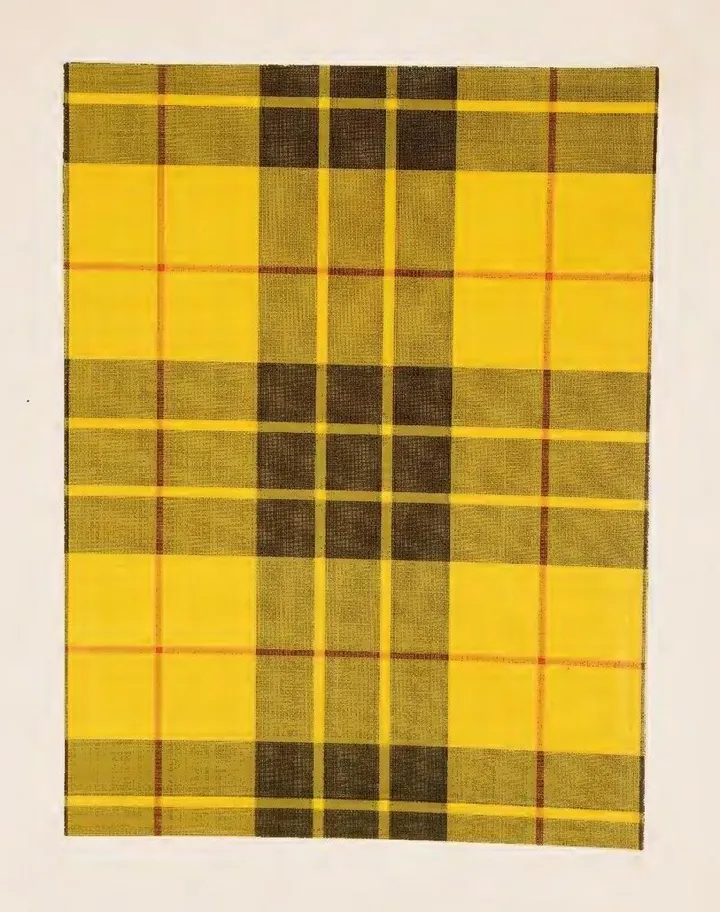
The Scottish Register of Tartans was set up under an act of 2008. It points out that many names, Scottish ones included, have no tartan of their own, and that no law decides who may wear which tartan.[17]
The Clearances
In the decades after Culloden, Highland landowners merged small farms into larger ones, enclosed the land, raised rents and brought in sheep. In a first wave of clearances, from the 1750s until 1815, many tenants were moved to the coast, where few could make a living from farming alone. A second wave, from 1825 to 1855, came with the decline of the kelp industry, a potato blight in 1836–37 and a famine in 1846–48. Landowners now often arranged, and sometimes paid for, the emigration of their poorest tenants. Estimates of the number of people displaced range from 70,000 to more than 150,000.[18]
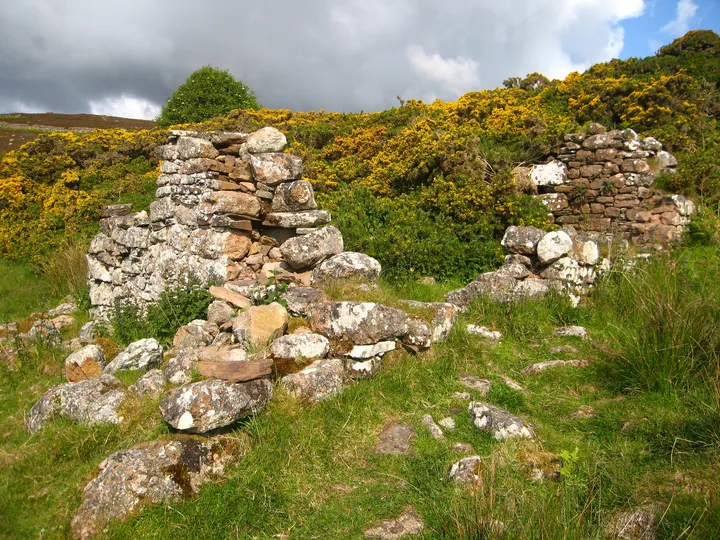
Some of those evicted found work on farms in the Lowlands or in the factories of Glasgow. Many left Scotland, most often for America, Canada or Australia. The Crofters Holdings (Scotland) Act of 1886 gave the remaining crofters security from eviction and a court to set their rents.[18]
The Declaration of Arbroath and Tartan Day
In 1320 the barons and community of Scotland asked the pope to recognize the country’s independence and Robert the Bruce as its lawful king. Their letter, the Declaration of Arbroath, says they are fighting “for freedom alone, which no honest man gives up but with life itself”. Scotland’s independence was acknowledged in 1328.[19]
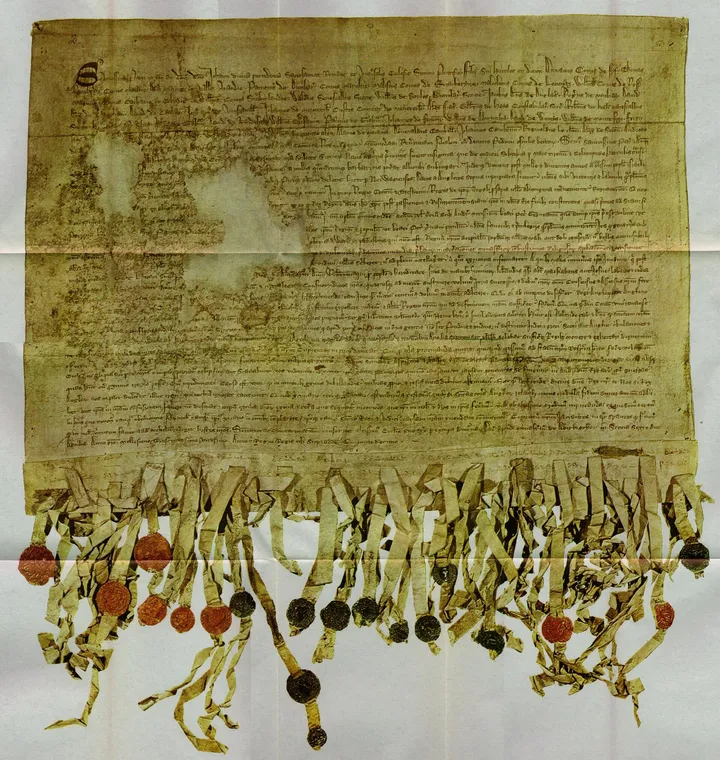
In 1707 Scotland and England were joined as one kingdom, Great Britain. Scotland kept its own legal system and its own established church.[20]
In 1998 the US Senate chose April 6, the date of the Arbroath letter, as National Tartan Day. Its resolution says the American Declaration of Independence “was modeled on that inspirational document”.[21] Historic Environment Scotland calls this a myth. It cites the scholar Euan Hague, who examined the sources of the men who drafted the Declaration of Independence and the records of their personal libraries. He concluded, “the Declaration of Arbroath is conspicuous only by its total absence.”[22]
Scottish roots in US statistics and Scottish records
The American Community Survey counts the first two ancestries a person reports.[23] Scottish and Scotch-Irish are separate answers.[4] The story of the Scotch-Irish is told under Irish heritage. The highest shares of residents with Scottish ancestry are found in northern New England and the West.[4]
Source: U.S. Census Bureau[4]
Family historians can search Scottish registers on ScotlandsPeople, run by the National Records of Scotland. Civil registration of births, marriages and deaths began on January 1, 1855. Before that, the Church of Scotland kept the records.[24] The oldest surviving parish register, from Errol in Perthshire, begins in 1553. In some remote areas the registers start only in the early 19th century. Registration was costly and unpopular, and many people never registered events at all.[25] Departure lists of emigrants are scarce, and arrival records in the new country usually give more detail.[26]
Scottish Americans since 1739
About 1.4 million of the Americans with Scottish ancestry live in California, Texas and Florida.[4]
- 1739
The first organized group of Highlanders, 350 people from Argyllshire, travels up the Cape Fear River in North Carolina and settles in what becomes Cumberland County.[27]
- 1773
British officials question Highlanders who are leaving Scotland. Laborers hope for better work in North Carolina, and farmers name high rents and oppressive landlords as their reasons.[27]
- 1776
On February 27, Loyalist forces charge across Moores Creek Bridge in North Carolina. The battle gives the Patriots their first significant victory of the Revolution and sees the last broadsword charge by Scottish Highlanders.[28]
- 1850
Residents born in Scotland number 70,550, according to the census.[29]
- 1930
The census finds 354,323 people born in Scotland, more than in any earlier count. By 1990 the number has fallen to 104,168.[29]
- 1990
In the census, more Americans report Scotch-Irish ancestry than Scottish, 5.6 million against 5.4 million.[30]
- 2024
Some 6.6 million Americans, 1.9% of the population, name Scottish ancestry, and 2.5 million name Scotch-Irish.[4]
Sources
- legislation.gov.uk: Scottish Languages Act 2025 (asp 10), sections 1 and 33
- National Records of Scotland: Scotland’s Census 2022, Rounded population estimates (September 14, 2023)
- Comhairle nan Eilean Siar: Gaelic in Scotland’s Census 2022, report to the Gaelic Committee (June 18, 2024)
- U.S. Census Bureau: American Community Survey 2024, 1-year estimates, Table DP02, Selected Social Characteristics, national and state data
- University of Aberdeen: Study reveals new insights into the origins of Scotland’s mysterious Picts, on Morez et al., PLOS Genetics (April 27, 2023)
- ScotlandsPeople, National Records of Scotland: Surnames, research guide
- Bede: Ecclesiastical History of the English Nation, Book I, Internet Medieval Sourcebook, Fordham University
- CELT, University College Cork: The Annals of Ulster, translations by Mac Airt and Mac Niocaill (to 1131) and by Hennessy and Mac Carthy
- University of Edinburgh: Scotland’s genetic landscape echoes Dark Age populations (September 3, 2019)
- Caroline Macafee and A. J. Aitken: A History of Scots to 1700, section 2, The origins and spread of Scots, Dictionaries of the Scots Language (2002)
- Brian Smith, Shetland Museum and Archives: 550 Years Ago, how Shetland became part of Scotland (February 3, 2022)
- Edmund Gilbert et al.: The genetic landscape of Scotland and the Isles, PNAS 116, no. 38 (September 2019)
- National Records of Scotland: Scotland’s Census 2022, Ethnic group, national identity, language and religion (May 21, 2024)
- Library of Congress: Scottish Clans, A Resource Guide, Introduction (July 22, 2025)
- Robin Eagles, The History of Parliament: A Farewell to Arms, Kilts and Sporrans, banning Scottish Highland dress in the aftermath of Culloden (November 17, 2020)
- Royal Collection Trust: John Sobieski Stolberg Stuart, Vestiarium Scoticum (1842), RCIN 1075694
- National Records of Scotland: The Scottish Register of Tartans, Frequently Asked Questions
- Karen Soutar, Historic Environment Scotland: The Highland Clearances (April 15, 2025)
- National Records of Scotland: The Declaration of Arbroath (updated February 10, 2025)
- Scottish Archives for Schools, National Records of Scotland and partners: The Union of 1707, The Union Achieved (2007)
- U.S. Government Publishing Office: S. Res. 155, Designating April 6 of each year as National Tartan Day, 105th Congress (agreed to March 20, 1998)
- Laura Harrison, Historic Environment Scotland: Myth-building and Myth-busting (June 17, 2020)
- U.S. Census Bureau: About Ancestry
- ScotlandsPeople, National Records of Scotland: Statutory registers, research guide
- ScotlandsPeople, National Records of Scotland: Church registers, research guide
- ScotlandsPeople, National Records of Scotland: Emigration and immigration, research guide
- National Park Service: Highland Scots, reading adapted from Kathryn Beach, The Highland Scots, Tar Heel Junior Historian (Spring 2006)
- National Park Service: Moores Creek National Battlefield
- U.S. Census Bureau: Campbell J. Gibson and Emily Lennon, Historical Census Statistics on the Foreign-born Population of the United States, 1850–1990, Working Paper No. 29 (February 1999)
- U.S. Census Bureau: Angela Brittingham and G. Patricia de la Cruz, Ancestry: 2000, Census 2000 Brief (June 2004)
More from Europe
British 4Italian 4German 3English 2Irish 2Spanish 2Albanian 1Basque 1Bosnian 1French 1Hungarian 1Kosovo Albanian 1