Celebrities with Ashkenazi Jewish Roots
Countries of origin documented in these profiles
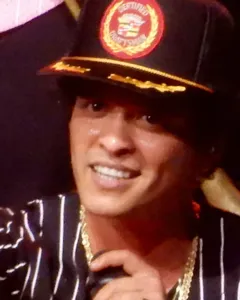 Bruno MarsAncestor from Ukraine came via Galveston
 SneakoGrandfather was half Ashkenazi Jewish
 Timothée ChalametRoots in Austria, Poland and Russia
No celebrity matches your search.
The first communities on the Rhine
Ashkenazi Jews emerged as a distinct group of the Jewish people in the Rhineland in the 10th century.[1] Jews from northern France or from Italy settled in Mainz in the late 10th century and in Worms perhaps a few decades later.[5]
In 1084 a fire burned the Jewish quarter of Mainz, and some of its families moved to Speyer. There Bishop Rüdiger gave them land, a wall around their quarter, a burial ground and the right to trade. In his charter of September 13, 1084, he wrote that he expected “the glory of our town would be augmented a thousandfold” if he settled Jews in Speyer.[6]
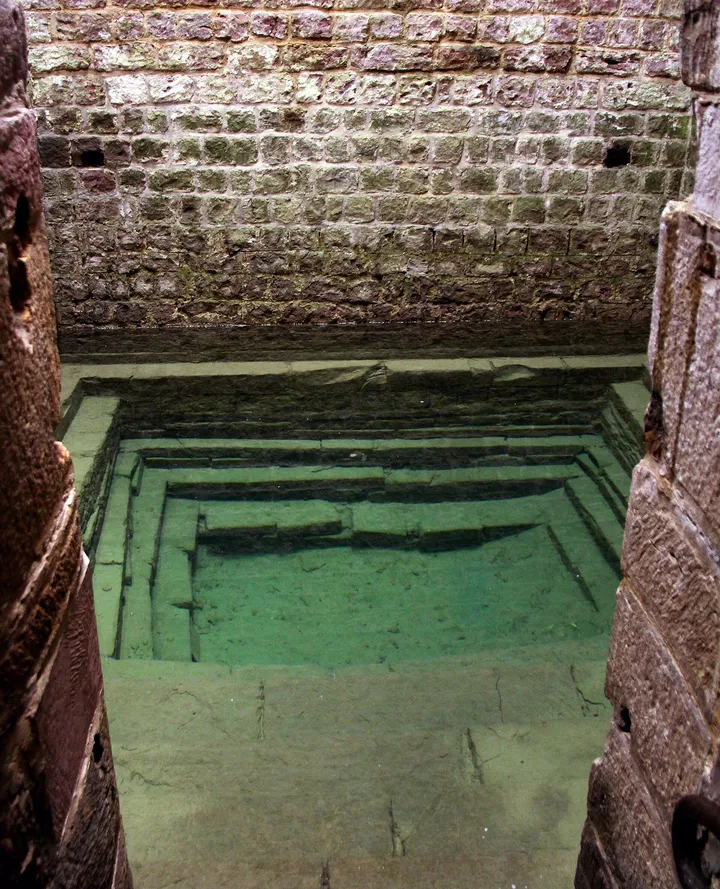
The Jewish communities of Speyer, Worms and Mainz formed a league called ShUM, from the initials of the cities’ medieval Hebrew names, Shpira, Warmaisa and Magenza.[7][8] Around 1220 the three passed joint community ordinances, the Taqqanot Qehillot ShUM. UNESCO added their synagogues, ritual baths and cemeteries to the World Heritage List in 2021 and calls them “the cradle of Ashkenazic Jewish living tradition”.[8] In Speyer’s former Jewish quarter, an underground mikveh, a ritual bath, has survived since about 1120. It is the oldest surviving bath of its kind in Europe.[9]
In the spring of 1096, as the First Crusade set out, Christian knights and mobs attacked the Jews of Mainz, Worms, Speyer and Cologne. Afterwards the communities read the names of the dead aloud in the synagogue on each anniversary. From this remembrance grew the yortsayt, the custom of saying the Kaddish prayer on the anniversary of a parent’s death.[5]
Poland, Lithuania and the shtetl
Between the 12th and 14th centuries, Jews were one stream in a large migration from the German-speaking lands to Poland. The historian Moshe Rosman points to Polish coins with Hebrew letters, struck by immigrant Jewish minters from 1177 to 1296, and to the Yiddish language as signs that Polish Jewry had its roots in Ashkenaz. In 1264 Duke Bolesław of Kalisz issued the first formal charter of rights for the Jews of Poland.[2]
Around 1500, perhaps 10,000 to 30,000 Jews lived in Poland and Lithuania. Historians estimate from a government census of 1764–1765 that the Polish–Lithuanian Commonwealth then had about 750,000, the largest Jewish community of its time and perhaps a third of all Jews in the world.[2]
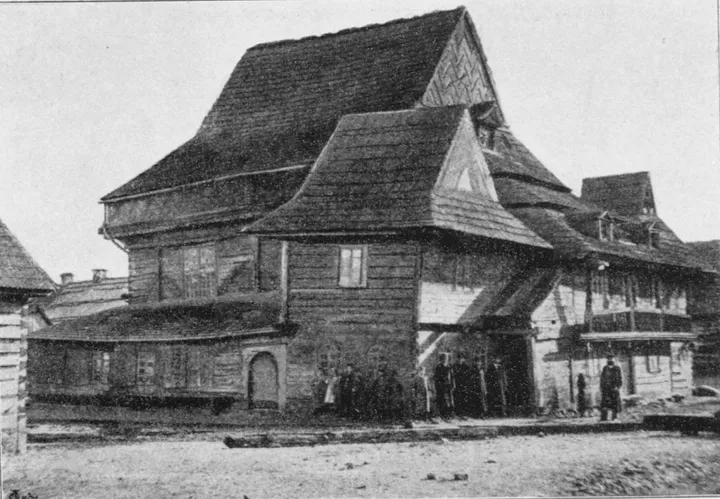
By the 1770s more than half of Poland’s Jews lived in private towns owned by nobles, and about a third in villages. Such a market town is known as a shtetl, the Yiddish word for town, and Jews sometimes made up 80% or more of its population.[10] In Zabłudów near Białystok, 2,621 Jews formed 68.6% of the population in 1897. The town’s wooden synagogue dated from the 1630s.[11]
Hasidism, a movement of religious revival, arose in the second quarter of the 18th century in Podolia, in the southeast of the commonwealth. Its origins are linked to Israel ben Eliezer, known as the Baal Shem Tov, who died in 1760. The movement’s opponents, the Misnagdim, are often called Litvaks today.[12]
Under Russian rule in the Pale of Settlement
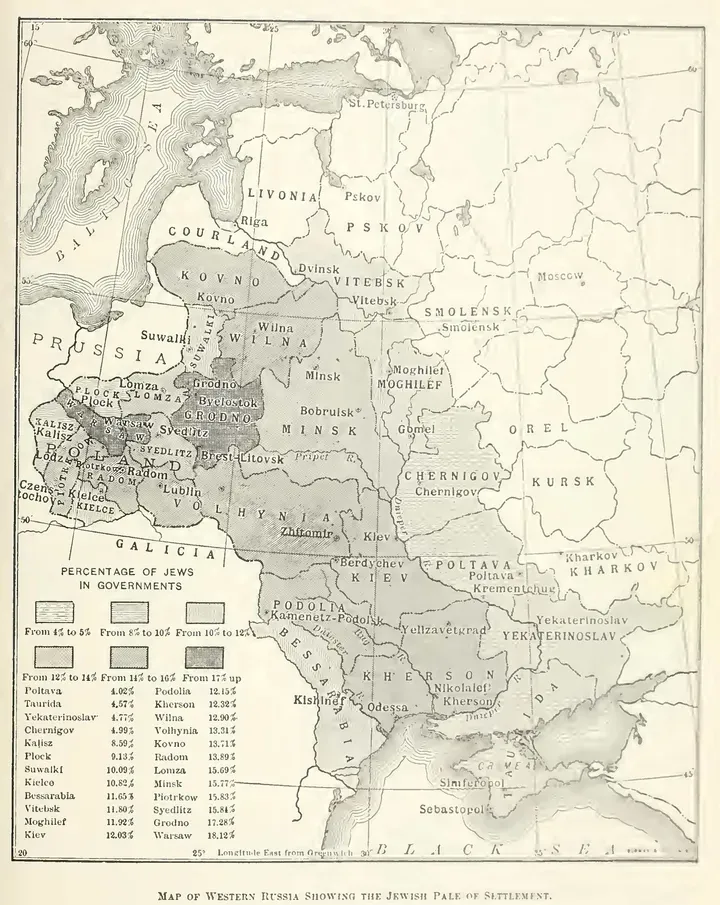
When Poland was partitioned at the end of the 18th century, the world’s largest Jewish community came under Russian, Prussian and Austrian rule. Catherine II established the Pale of Settlement in 1791, and a decree of 1835 formalized it.[10] The Pale comprised the territories of the Russian Empire in which Jews were allowed to settle permanently. It covered about 472,590 square miles in the Lithuanian, Belarusian and Ukrainian provinces, Crimea and Bessarabia. Russian-ruled Congress Poland had separate rules.[13]
The Jewish population of the empire grew fivefold between 1800 and 1900.[13] On the eve of the First World War, about 94% of Russia’s Jews, some 5 million people, still lived in the Pale.[10] The Russian Provisional Government abolished it on April 2, 1917.[13]
Before the Second World War most of Europe’s Jews still lived in the east of the continent.[14]
Source: United States Holocaust Memorial Museum[14]
The shtetl survived wars, pogroms and mass emigration. In the words of the historian Samuel Kassow, “it was the Holocaust alone that finally destroyed it.”[10]
What DNA studies show about Ashkenazi ancestry
Geneticists describe Ashkenazi Jews as descendants of a small set of founders.[1] A study published in 2014 sequenced the complete genomes of 128 Ashkenazi Jews and confirmed “a recent bottleneck of merely ≈350 individuals”. In its model, today’s Ashkenazi population formed 600–800 years ago from a European and a likely Middle Eastern population, and the European side contributed 46–50% of the gene pool.[15]
In 2022 a team analyzed DNA from 33 Jews buried in Erfurt, Germany, in the 14th century. They were genetically similar to Ashkenazi Jews today. A third of them carried a maternal lineage common among Ashkenazi Jews, and eight carried disease variants that still affect the community. The authors conclude that the founder event happened before the 14th century.[1]
Where the maternal lines came from is disputed. In 2006 a team led by Doron Behar found that about 40% of Ashkenazi Jews descend in the female line from just four women, whose lineages it judged “likely of Near Eastern ancestry”.[16] Researchers led by Marta Costa traced all four lineages to prehistoric Europe in 2013. They concluded that most Ashkenazi maternal lines were “assimilated within Europe” and pointed to a significant role for women who converted to Judaism.[17]
One reanalysis of earlier data claimed that much of Ashkenazi ancestry came from the Khazars, a Turkic-speaking people who lived north of the Caucasus about 1,000 years ago. Behar’s team tested this in 2013 with 1,774 samples from 106 Jewish and non-Jewish populations and found “no indication of a significant genetic contribution either from within or from north of the Caucasus region”.[18]
Tay-Sachs, a genetic disorder of the nervous system, is far more common among Ashkenazi Jews. About one in 27 Jews in the United States carries the gene, compared with about one in 250 people in the general population. Extensive carrier testing has considerably reduced the number of Ashkenazi children born with the disease.[19]
Surnames, given names and family records
Most Ashkenazi families took hereditary surnames between the late 18th and the mid-19th century, when state laws required them. Before that, Jews were usually known by their own name and their father’s. Prague was the only community in Eastern Europe where hereditary names were common, and elsewhere only certain rabbinical families, among them Horowitz, Landau and Schapiro, used them.[20]
Emperor Joseph II issued the first such law in 1787 for the Habsburg Empire, where most Jews lived in Galicia. The Pale followed in 1804 and Congress Poland in 1821. Austrian officials approved or assigned the names. Almost all were based on German words, often compounds of a few roots such as Gold, Rosen or Stern with berg, feld or stein. In the Pale many names came from towns, such as Umanski, and in several districts of eastern Belarus about a third were formed from women’s names, such as Dvorkin and Malkin.[20]
Katz is a Hebrew acronym meaning “priest of righteousness” and marks descent from the priests, the kohanim. Segal marks descent from the Levites. Children were traditionally named after deceased relatives, a custom known in the German lands since the Middle Ages. In North America many family names were later anglicized.[20]
The National Archives calls the belief that immigration officials changed names one of the biggest myths of American immigration history. “Federal immigration agents were never authorized to change anyone’s name,” it notes. Most passenger lists were filled out by the ship’s master or the shipping company before the ship left Europe.[21]
Emigrants from the same town organized landsmanshaftn, hometown associations. After the Holocaust, survivors and emigrants published many hundreds of memorial books about their towns, called yizker-bikher. Nearly complete collections of these books, a valued genealogical source, are held by the YIVO Institute in New York, Yad Vashem in Jerusalem and the Library of Congress.[22]
Ashkenazi Jews in the United States
Between 1881 and 1914 more than 2 million Jews from Eastern Europe migrated to America. About 1.6 million came from the Russian Empire (including Poland), 380,000 from Austria-Hungary (mainly Galicia) and 80,000 from Romania.[4]
- 1902
On December 3, a landsmanshaft called the Voliner Zhitomirer Aid Society is organized in the store of Max Meyerson. Renamed the Hebrew Immigrant Aid Society (HIAS), it opens a bureau on Ellis Island in 1904.[23]
- 1909
On November 23, more than 20,000 Yiddish-speaking immigrants, most of them young women, begin an eleven-week strike in New York’s shirtwaist industry. It is the largest strike by women in American history up to that time.[24]
- 1914
The Joint Distribution Committee is founded in New York to send aid to Jews in Europe and Palestine during World War I. By the end of the war American Jews have raised more than $16 million for this relief.[25]
- 1940
The YIVO Institute for Jewish Research, founded in Vilna in 1925, moves to New York.[26] In the same year the leader of the Lubavitch Hasidim reaches New York and reestablishes his court there.[12]
- 1948
Congress passes the Displaced Persons Act and amends it in 1950. By 1952 more than 80,000 Jewish displaced persons, Holocaust survivors who had waited in camps and refugee centers in Europe, have immigrated to the United States.[27]
- 1974–1975
With the Jackson–Vanik Amendment, Congress makes favorable trade status for the Soviet Union depend on the freedom to emigrate. The Soviet government cuts Jewish emigration in response.[4]
- 1990
Between 120,000 and 170,000 Jews from the Soviet Union live in the United States when the Soviet system ends. By 2000 another 300,000 have arrived, with Ukraine supplying the largest share and Russia the second largest.[4]
- 2020
A Pew Research Center survey finds that most Orthodox (87%), Conservative (73%) and Reform (71%) Jews in the United States identify as Ashkenazi. Six in ten Jewish American adults are both Ashkenazi and born in the country.[28]
Sources
- Shamam Waldman et al.: Genome-wide data from medieval German Jews show that the Ashkenazi founder event pre-dated the 14th century, Cell 185 (December 2022)
- Moshe Rosman: Poland before 1795, YIVO Encyclopedia of Jews in Eastern Europe (2010)
- Isaac Bleaman and William F. Weigel: Yiddish (Eastern), HUC Jewish Language Project
- Eli Lederhendler: America, YIVO Encyclopedia of Jews in Eastern Europe (2010)
- Ivan G. Marcus: Ashkenaz, YIVO Encyclopedia of Jews in Eastern Europe (2010)
- Charter of Bishop Rüdiger of Speyer (September 13, 1084), translated in Robert Chazan (ed.): Church, State, and Jew in the Middle Ages (1980), via University of Maryland
- SchUM-Städte Speyer, Worms, Mainz e.V.: ShUM-Sites Speyer, Worms, Mainz, UNESCO World Heritage
- UNESCO World Heritage Centre: ShUM Sites of Speyer, Worms and Mainz (inscribed 2021)
- SchUM-Städte Speyer, Worms, Mainz e.V.: Speyer, synagogue, women’s shul and mikveh
- Samuel Kassow: Shtetl, YIVO Encyclopedia of Jews in Eastern Europe (2010)
- Benyamin Lukin: Zabłudów, YIVO Encyclopedia of Jews in Eastern Europe (2010)
- David Assaf: Hasidism, Historical Overview, YIVO Encyclopedia of Jews in Eastern Europe (2010)
- John Klier: Pale of Settlement, YIVO Encyclopedia of Jews in Eastern Europe (2010)
- United States Holocaust Memorial Museum: Jewish Population of Europe in 1933, Population Data by Country, Holocaust Encyclopedia (November 18, 2024)
- Shai Carmi et al.: Sequencing an Ashkenazi reference panel supports population-targeted personal genomics and illuminates Jewish and European origins, Nature Communications 5 (September 2014)
- Doron M. Behar et al.: The Matrilineal Ancestry of Ashkenazi Jewry, Portrait of a Recent Founder Event, American Journal of Human Genetics 78 (March 2006)
- Marta D. Costa et al.: A substantial prehistoric European ancestry amongst Ashkenazi maternal lineages, Nature Communications 4 (October 2013)
- Doron M. Behar et al.: No Evidence from Genome-Wide Data of a Khazar Origin for the Ashkenazi Jews, Human Biology 85, no. 6 (2013)
- National Human Genome Research Institute: About Tay-Sachs Disease (March 17, 2011)
- Alexander Beider: Names and Naming, YIVO Encyclopedia of Jews in Eastern Europe (2010)
- National Archives, NARAtions blog: Family History Friday, The real scoop about name changes in immigration records (December 18, 2009)
- Jonathan Boyarin: Yizker-bikher, YIVO Encyclopedia of Jews in Eastern Europe (2010)
- Center for Jewish History: Guide to the HIAS records, Organization Timeline
- Tony Michels: Uprising of 20,000 (1909), Shalvi/Hyman Encyclopedia of Jewish Women, Jewish Women’s Archive
- JDC Archives: History of JDC, 1914–1919, War and Emergency Relief, Establishment of the JDC
- YIVO Institute for Jewish Research: History of YIVO
- United States Holocaust Memorial Museum: Displaced Persons, Holocaust Encyclopedia
- Pew Research Center: Race, ethnicity, heritage and immigration among U.S. Jews, in Jewish Americans in 2020 (May 11, 2021)